Hydrogen Water
Alkaline ionized water, known in science as electrolyzed reduced water. Its key ingredient is dissolved hydrogen. For the first time, everything about it is gathered in one place: history, research, myths and safety. Every claim comes with a source and a label showing how well it has been tested. Read carefully.
Tap a section of the drop or choose a section below.
The water we came from
Nature "tuned" water long ago. The ocean is slightly alkaline, a baby grows for nine months in slightly alkaline water, and almost everything inside us is slightly alkaline too. Only the "entrances" are acidic: the stomach, the skin, the vagina. There, acid acts as a guard.
Ocean
Seawater is slightly alkaline. Because of carbon dioxide, its pH has fallen from 8.2 to 8.1 since the start of the industrial era. The ORP of seawater is positive, about +430 mV: dissolved oxygen makes it so.
EEA ↗ Cooper, J Mar Biol Assoc ↗Amniotic fluid
A baby grows in slightly alkaline water. Doctors use this pH to tell leaking amniotic fluid from ordinary discharge, which has a pH of 3.8–4.5.
Nitrazine test ↗Blood
Blood keeps its pH within very narrow limits. The kidneys, the lungs and blood buffers are responsible for this.
McMaster Textbook ↗Small intestine
A sensor capsule showed that pH rises from the start of the small intestine to its end. In the caecum it is about 6.4, rising to 7.0 by the rectum.
Evans et al. Gut, 1988 ↗Acid barriers
The stomach, the skin and the vagina. Acid at the entrance kills microbes, which is why these places need to be acidic.
Stomach ↗ Skin: Lambers, 2006 ↗ Vagina ↗Hydrogen inside us
Gut bacteria produce hydrogen every day: roughly half of the litre of gas a person releases. Other bacteria use it as fuel.
Welsh et al. Nature Microbiology, 2025 ↗Living helpers: lactobacilli and bifidobacteria
Lactobacilli keep the acid shield
When lactobacilli dominate in the vagina, they produce lactic acid and keep the environment acidic. This protects against infection. It is one of the few places in the body where acid means normal and healthy.
O'Hanlon et al. PLoS ONE, 2013 ↗Bifidobacteria protect the gut
Bifidobacteria are the main residents of a breastfed baby's gut. The acetic acid they produce protected mice from a lethal gut infection.
Fukuda et al. Nature, 2011 ↗Ionized water and bifidobacteria
In a Japanese double-blind trial, alkaline electrolyzed water with hydrogen increased bifidobacteria in 9 out of 10 people.
Tanaka et al. Medical Gas Research, 2021 ↗The cell as a spaceship
A cell is sealed by a membrane, and water enters through special airlocks: aquaporins. They were discovered by the American Peter Agre in 1992, earning him the 2003 Nobel Prize in Chemistry. An aquaporin lets water through and holds back charged particles. A single kidney has tens of billions of these channels: the kidneys filter about 170 litres of primary urine a day and return almost all of it to the blood, excreting about a litre. Nobel Committee, 2003 ↗
We are water
An adult is about 60% water, a newborn 75–78%. Water carries nutrients and waste, cools the body and is the medium for every reaction in our cells.
of water in a 70 kg person: 28 L inside cells, 14 L outside, about 3 L of it in blood plasma
a day are lost through urine, breathing and skin, and the same amount must be replaced through drinks and food
water loss is enough to impair attention, alertness and endurance
of total water a day, including food, for women and men according to EFSA
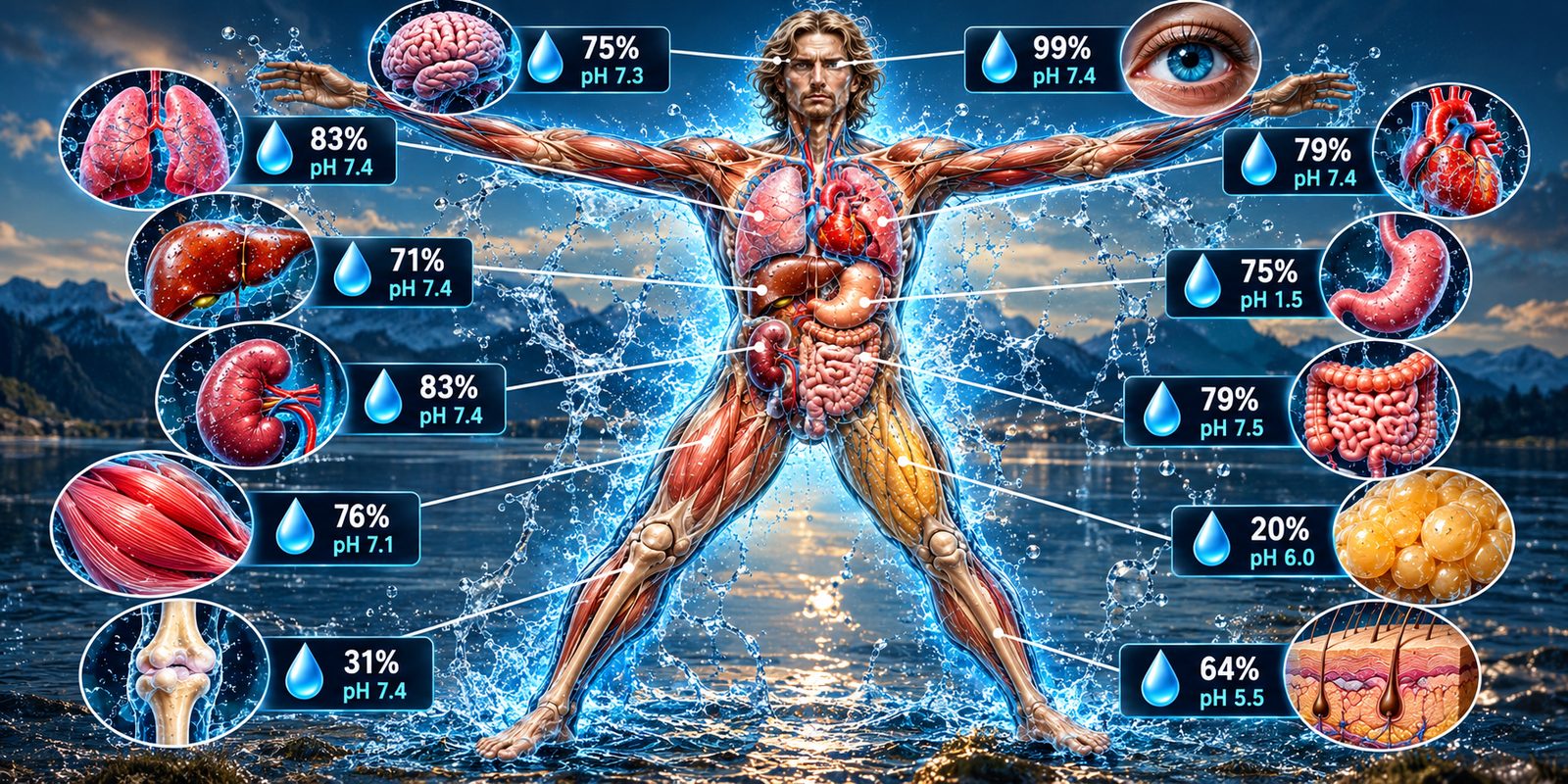
A newborn is about 78% water, a one-year-old 65%, an adult man about 60%, a woman about 55%. USGS based on Mitchell et al. J Biol Chem, 1945 ↗
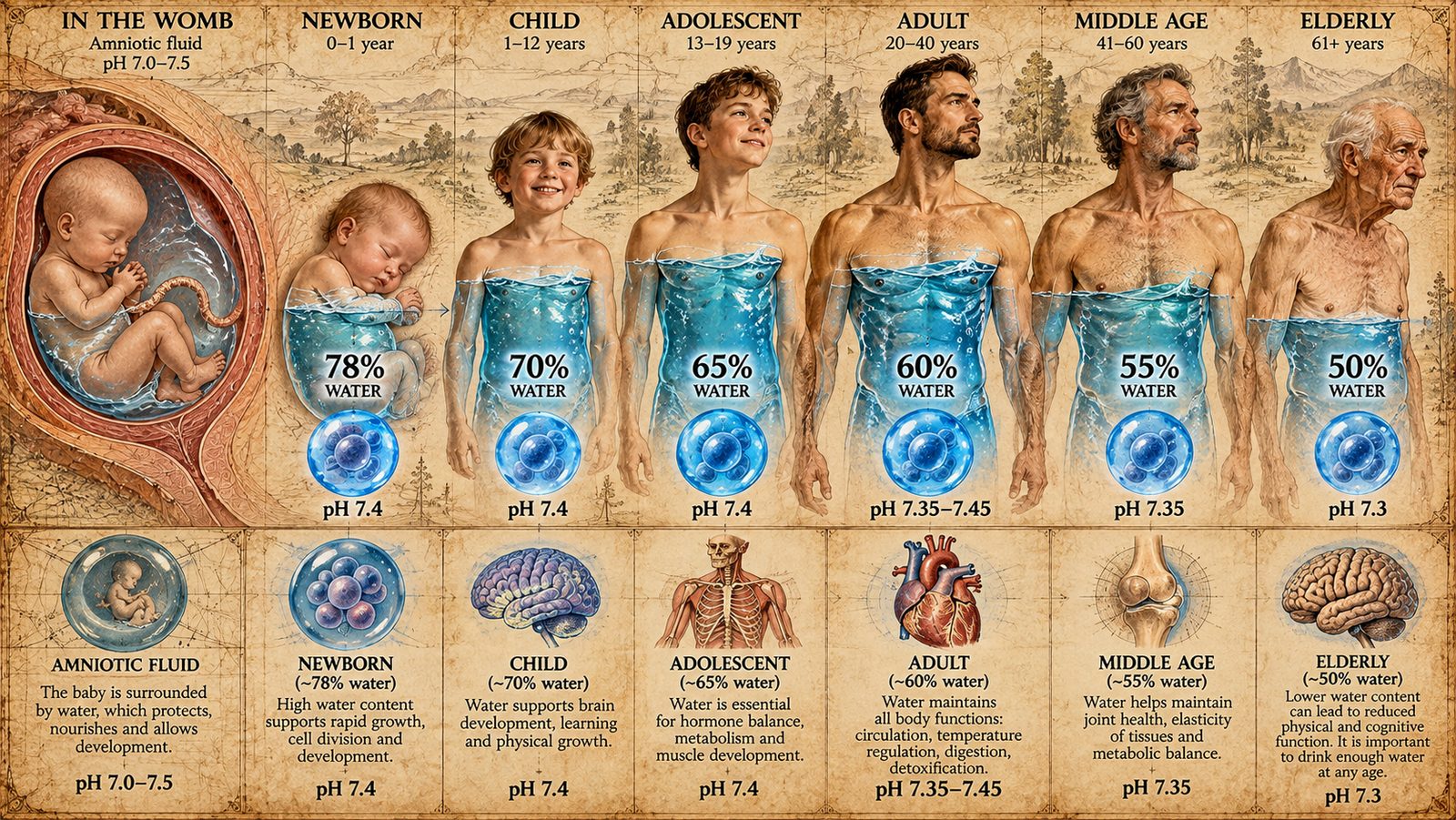
With age there is less water in the body, from 78% in a newborn to about 50% in old age. In a healthy person, blood pH stays within 7.35–7.45 at any age. A pH of 7.3 in the elderly person in the picture means metabolic acidosis, a dangerous condition that needs a doctor. With age the kidneys remove acids less well, so the risk of such a shift grows. Frassetto et al. J Gerontol, 1996 ↗
We have forgotten how to drink
Many people drink only when thirsty. But thirst switches on when the body has already lost 1–3% of its water, and in older people it is blunted. So it is better to drink water on a schedule rather than by thirst. Jéquier, Constant, 2010 ↗
The 30 ml per kilogram rule is used, for example, in NHS guidance. Start with one glass of alkaline water at pH 8–8.5 a day, and after two weeks move up to 0.5–1 L. With kidney or heart disease, your doctor sets your water intake. NHS ↗ 3aaa ↗
Those who drink more water are less likely to develop high blood sugar
In France, 3,615 people with normal blood sugar were followed for 9 years. Those who drank 0.5–1 L of water a day developed high blood sugar 32% less often than those who drank less than 0.5 L. The authors stress that this is an observation and does not prove cause. A possible mechanism is the hormone vasopressin, which rises when water is short.
Roussel et al. Diabetes Care, 2011 ↗Japan, the USSR and everyone else
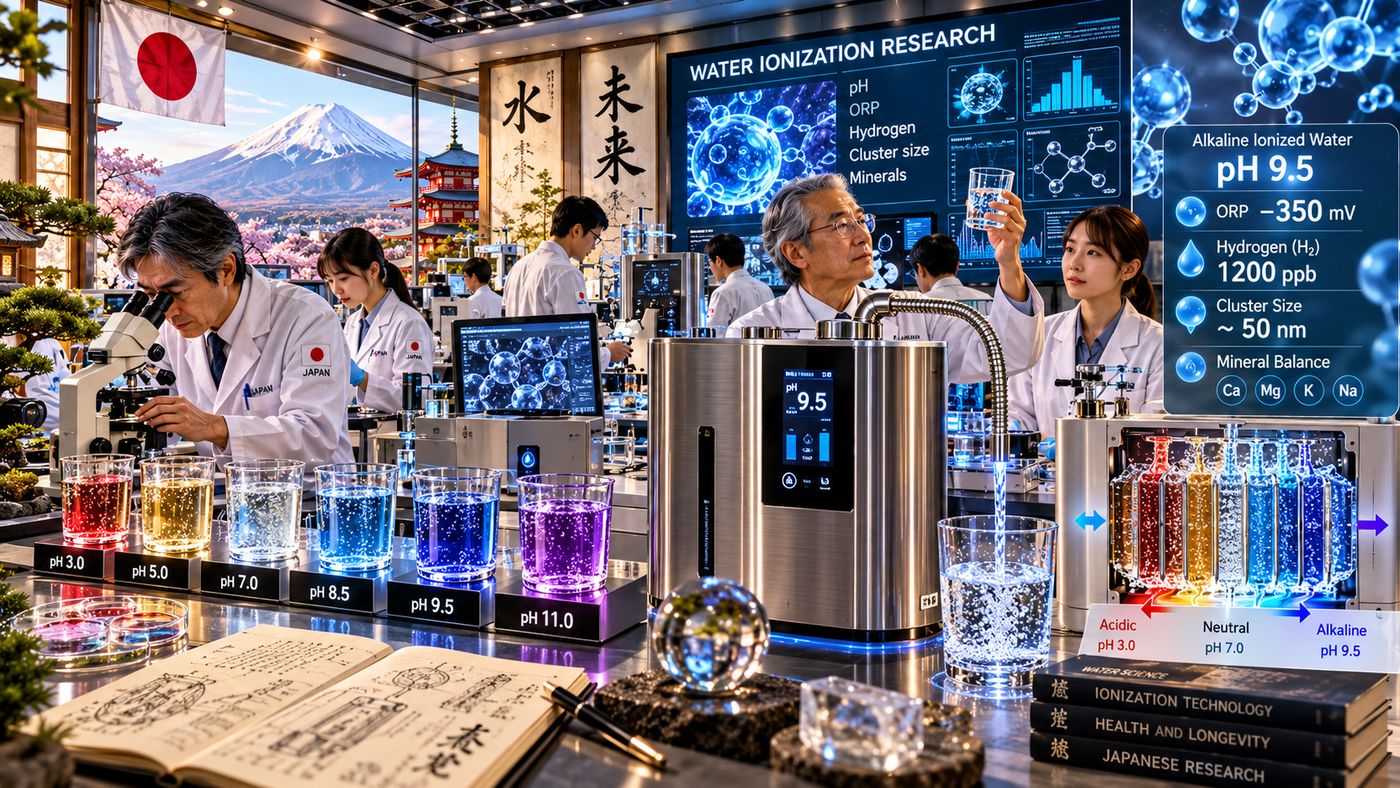
Three strands of one story. In Japan, the ionizer became a medical device. In the USSR, "living" and "dead" water were invented. And Western science tests it all with double-blind trials.
- Fairy talesOld Rus
"Living and dead water". In Russian fairy tales, dead water heals wounds and living water brings people back to life. Centuries later, these names would be given to two kinds of electrolyzed water.
- 1931Japan
The beginning. Researcher Michisue Suwa begins studying the link between water and electricity. 3aaa Association ↗
- 1952–1960Japan
The first water electrolysis device (1952), experiments in rice fields with the University of Tokyo (1954), a society for medical research on electrolyzed water (1960).
- 1965Japan
Medical device. By notice No. 763 of 8 October 1965, the Pharmaceutical Affairs Bureau of Japan's Ministry of Health recognises the device for producing electrolyzed water as a medical device. 3aaa ↗
- 1960–1975USSR
Tashkent. At the SredAzNIIGaz institute, unusual properties of water after electrolysis are noticed during well drilling. In 1975 engineer Vitold Bakhir describes electrochemical activation of water (ECA). The alkaline catholyte is called "living water", the acidic anolyte "dead water". Kommersant, 1998 (in Russian) ↗
- 1979Japan
A flow-through ionizer connected directly to the tap. The name "alkaline ionized water" appears.
- 1981USSR
The country learns about "living water". The magazine "Izobretatel i Ratsionalizator" (No. 2, V. Latyshev's essay "Unexpected Water") reports the discovery. Home-made devices appear across the country. Bakhir warned that a jar with steel electrodes produces water containing heavy metals. Delovoy Peterburg, 2006 (in Russian) ↗
- 1985USSR
Official recognition. The USSR Higher Attestation Commission recognises electrochemical activation as a new class of physico-chemical phenomena. The Ekran research enterprise produces STEL units, whose anolyte disinfects hospitals. Kommersant (in Russian) ↗
- 1992Japan
List of effects. A bulletin of Japan's Ministry of Health: alkaline ionized water helps with chronic diarrhoea, indigestion, abnormal intestinal fermentation and hyperacidity. In the same year, a consumer centre review casts doubt on these effects.
- 1993–1999Japan
Tested by science. After debate in parliament, the Ministry of Health demands data. Professor Itokawa's committee (Kyoto) confirms safety (1994) and some of the gastrointestinal effects (1997). In 1999 the first double-blind comparative trial of drinking water is reported. Itokawa. J Functional Water, 2003 ↗
- 2005Japan
A revised pharmaceutical law makes the household ionizer a controlled medical device (standard JIS T 2004). Its purpose under notice No. 112: "producing alkaline drinking water to improve gastrointestinal symptoms". 3aaa ↗
- 2000sRussia
"Dead water" becomes a medicine. "Anolyte neutral ANK" is registered as an antiseptic for skin, mucous membranes and wounds (registration LS-002150), available on prescription. RLS drug register (in Russian) ↗
- 2007Japan
Hydrogen medicine. Ohsawa and colleagues in Nature Medicine: molecular hydrogen selectively neutralises the most aggressive radicals. It became clear that the hydrogen in the water matters, not just the alkalinity. Ohsawa et al. Nat Med, 2007 ↗
- 2008Korea
Korea recognises four effects. The Korea Food and Drug Administration (KFDA) allows ionizers to state the effect of water at pH 8.5–10: chronic diarrhoea, indigestion, abnormal fermentation, excess acid. The rule applies from 1 July 2008. Financial News, 2007 ↗
- 2010sUSA
American universities. New York: water at pH 8.8 switches off pepsin (2012). Drexel University: blood viscosity after exercise (2016). JAMA Otolaryngology: alkaline water and diet for reflux (2017). Details in the sections below.
- TodayWorld
A whole industry. Dozens of companies make ionizers. Analysts at Allied Market Research list Panasonic, Enagic, Fujiiryoki, KYK, Tyent, Chanson Water, AlkaViva, Life Ionizers, PurePro, Vollara and others among the key players. In Japan, household ionizers are certified as medical devices under standard JIS T 2004. Allied Market Research ↗
How water becomes "living"
Inside an ionizer, water flows between two electrodes separated by a membrane. Each electrode produces its own kind of water.
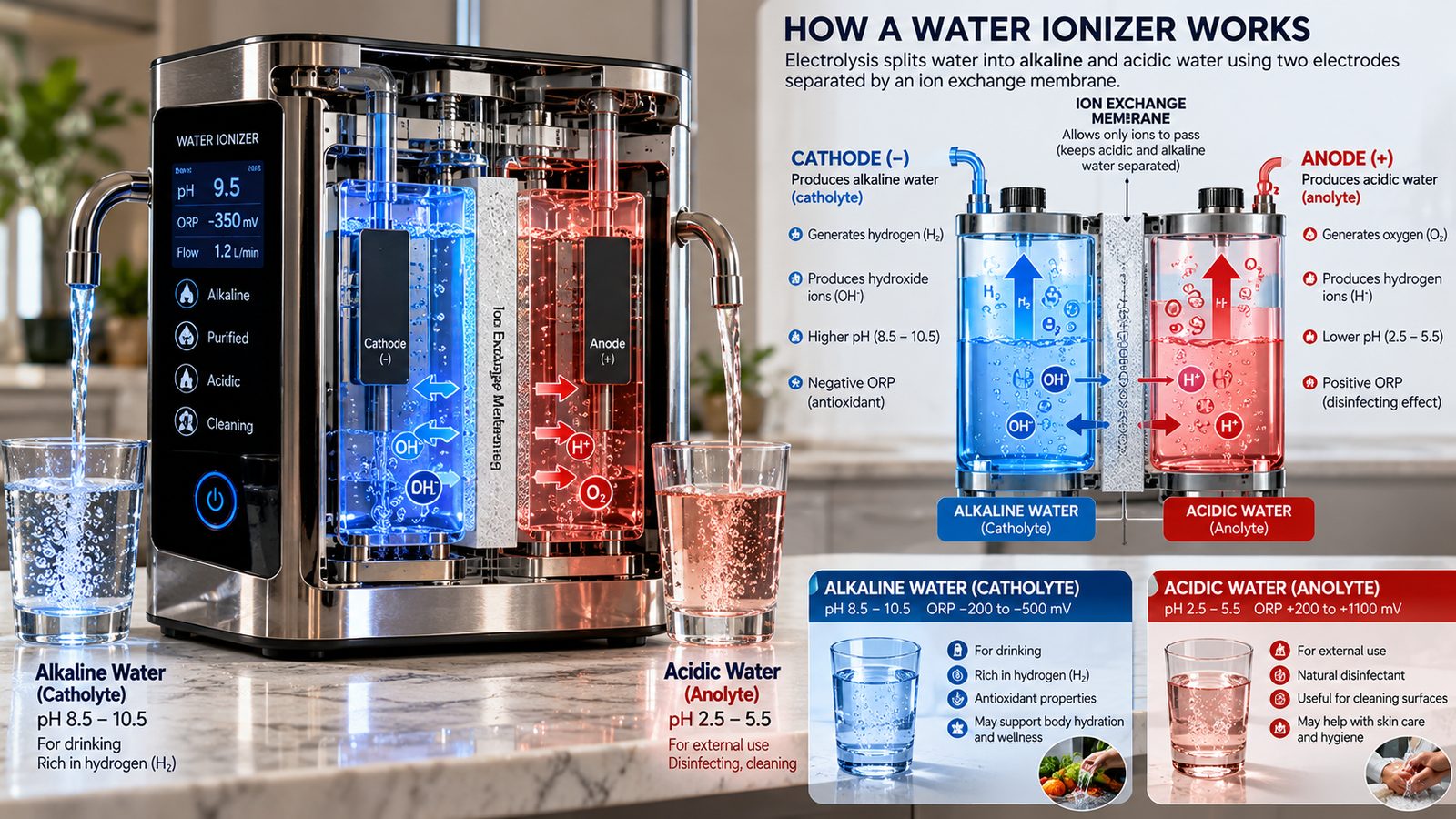
How an ionizer works. The membrane lets only ions through and separates the alkaline water (catholyte) from the acidic water (anolyte). For drinking, alkaline water at pH 8.5–9.5 and no higher than 10 is recommended.
The pH scale: where each water sits
What it is called. In Russian: alkaline ionized, "living" or hydrogen water. In English: alkaline ionized water, scientifically electrolyzed reduced water (ERW), and in Japan increasingly electrolyzed hydrogen water. All of these are the same water from the ionizer's cathode.
ORP, oxidation-reduction potential, shows whether water takes electrons or gives them away. Plus means the water oxidises, minus means it reduces. Ionized water gets its negative ORP from dissolved hydrogen, not from the alkalinity itself. This is the conclusion of a 2022 review.
Hydrogen escapes, so ionized water is drunk fresh. The Japanese manufacturers' association warns that during storage and when making tea, pH returns to neutral.
Reduced water protects DNA
Kyushu University showed that water from the cathode neutralises reactive oxygen species and protects DNA from oxidative damage in a test tube.
Shirahata et al. BBRC, 1997 ↗Hydrogen, a selective antioxidant
Hydrogen neutralises the most aggressive hydroxyl radical and leaves alone the radicals the body needs for signalling. In animals it reduced brain damage after ischaemia.
Ohsawa et al. Nature Medicine, 2007 ↗The main active ingredient is hydrogen
A review of electrolyzed reduced water: the therapeutic effects are linked to molecular hydrogen, not to alkalinity as such.
LeBaron, Sharpe, Ohno. Int J Mol Sci, 2022 ↗The hydrogen bottle
An ionizer gives hydrogen together with alkalinity. A hydrogen bottle gives only hydrogen, but anywhere you are. And according to current data, the main active ingredient is precisely molecular hydrogen, H₂.
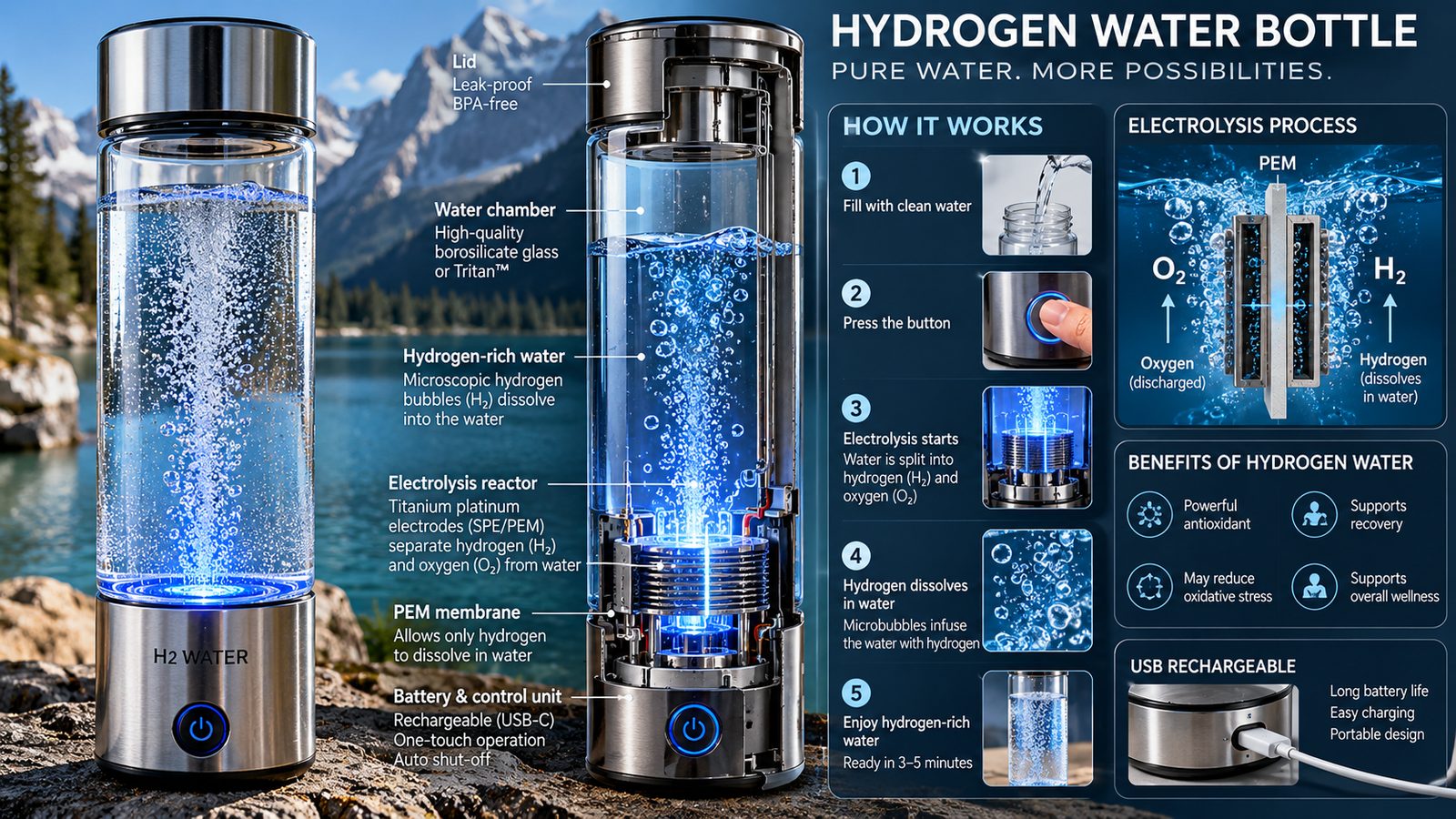
How a hydrogen bottle works. An electrolyser with platinum electrodes and a PEM membrane: oxygen is vented, hydrogen dissolves in the water.
Electrodes
Titanium electrodes coated with platinum, a platinum-group metal. Platinum does not rust or release metal into the water. The current splits water: hydrogen forms at the cathode, oxygen at the anode.
Hatae, Miwa. Med Gas Res, 2021 ↗Membrane
In models with a PEM (SPE) membrane, oxygen, ozone and chlorine go into a separate chamber and hydrogen stays in the glass. In a bottle without a membrane but with smooth platinum, Japanese scientists measured ozone below the detection limit and chlorine within safety limits. In other bottles chlorine rose to 0.5 mg/L.
Hatae, Miwa, 2021 ↗How much hydrogen
The bottle tested produced 0.44–0.48 mg/L of hydrogen in 10–30 minutes, with an ORP of about −245 mV. Human trials have used water with roughly 0.5 to 5 mg/L.
Hatae, 2021 ↗ Ishibashi, 2012 ↗What hydrogen does
Hydrogen selectively neutralises the most aggressive particles, the hydroxyl radical and peroxynitrite, and leaves alone the molecules cells need for signalling.
Ohsawa et al. Nature Medicine, 2007 ↗Clinical trials
A 2023 review counted 81 clinical trials of hydrogen and 64 publications in humans: heart, lungs, brain, infections, oncology and more.
Johnsen et al. Molecules, 2023 ↗How to drink it
Hydrogen escapes, so the water is drunk right after the cycle, without leaving the bottle open. Fresh water is the main rule for the ionizer too.
3aaa ↗How to choose a bottle
Look for
- Electrodes: platinum-coated titanium.
- A PEM/SPE membrane or independent testing for chlorine and ozone.
- Hydrogen concentration in mg/L (ppm), measured by an independent laboratory.
- A flask of glass or BPA-free food-grade plastic.
Be careful
- "Active" or "atomic" hydrogen are advertising words. What works is molecular H₂.
- A smell of chlorine after the cycle is a reason not to drink that water.
- ORP alone does not show how much hydrogen is in the water.
Reactors, minerals, nature
A kitchen ionizer is not the only way to get alkaline water with a negative ORP. There are industrial reactors, magnesium and mineral cartridges, and natural products that change water.
Reactor ionizers: the Bakhir school
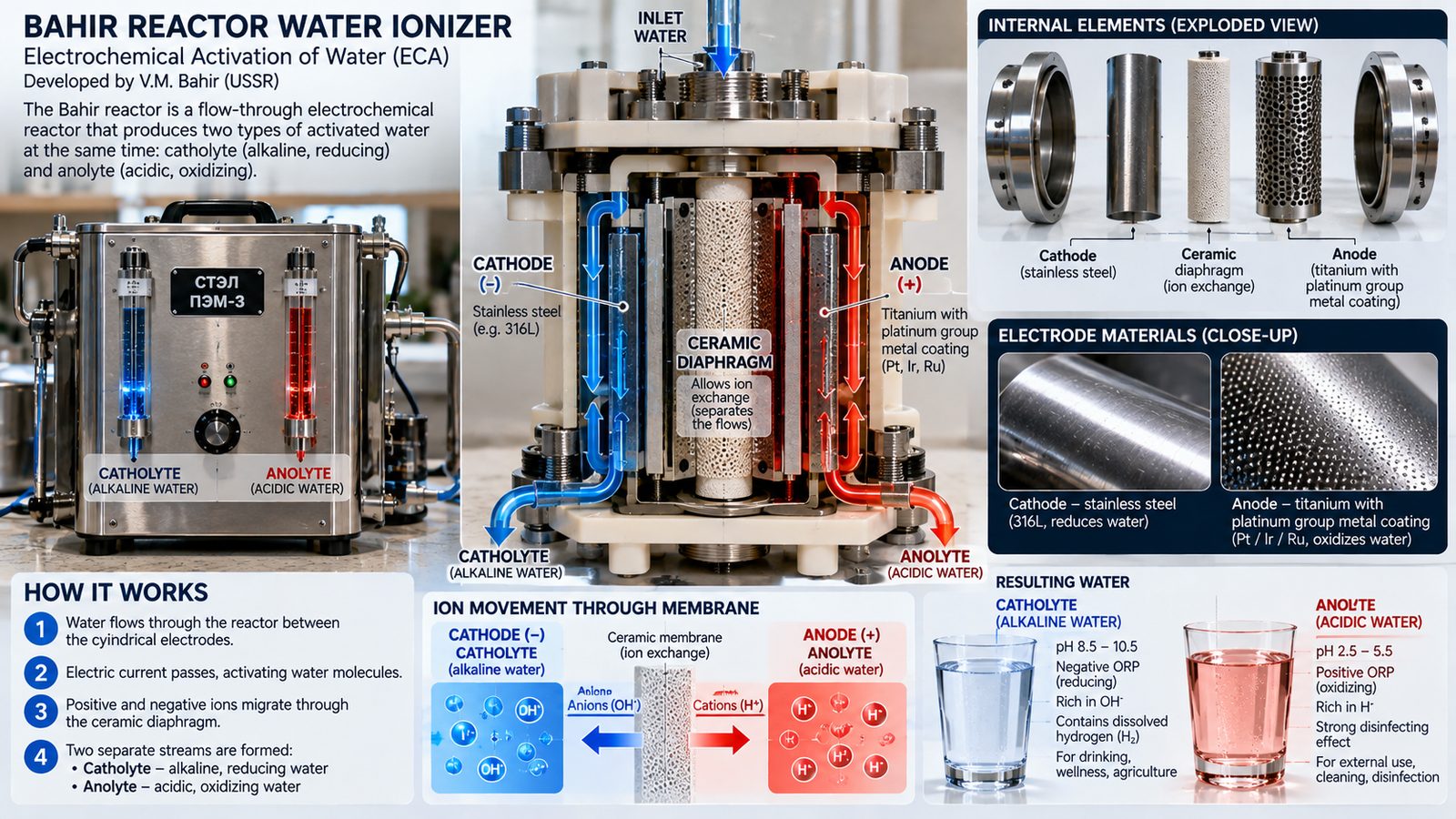
A flow-through electrochemical reactor and a STEL unit. In Bakhir's patent both electrodes are made of titanium tubes, with the anode coated in iridium oxide.
A flow reactor instead of a jar
A household ionizer makes water in batches or in a flat cell. Bakhir's reactor is a tube within a tube: the anode inside, the cathode outside, a ceramic diaphragm between them. Water flows continuously and leaves in two streams, catholyte and anolyte. STEL units, which supply anolyte for hospitals, run on such elements.
Kommersant, 1998 ↗ RLS: Anolyte ANK ↗How a modern reactor is built
A US patent for a modular cell by Bakhir and colleagues: electrodes made of titanium tubes, an anode coated with iridium oxide, a ceramic diaphragm of aluminium and zirconium oxides. The cell turns drinking water into activated anolyte and catholyte.
US 8.961.750 B2 ↗Mineral ionizers: magnesium and cartridges
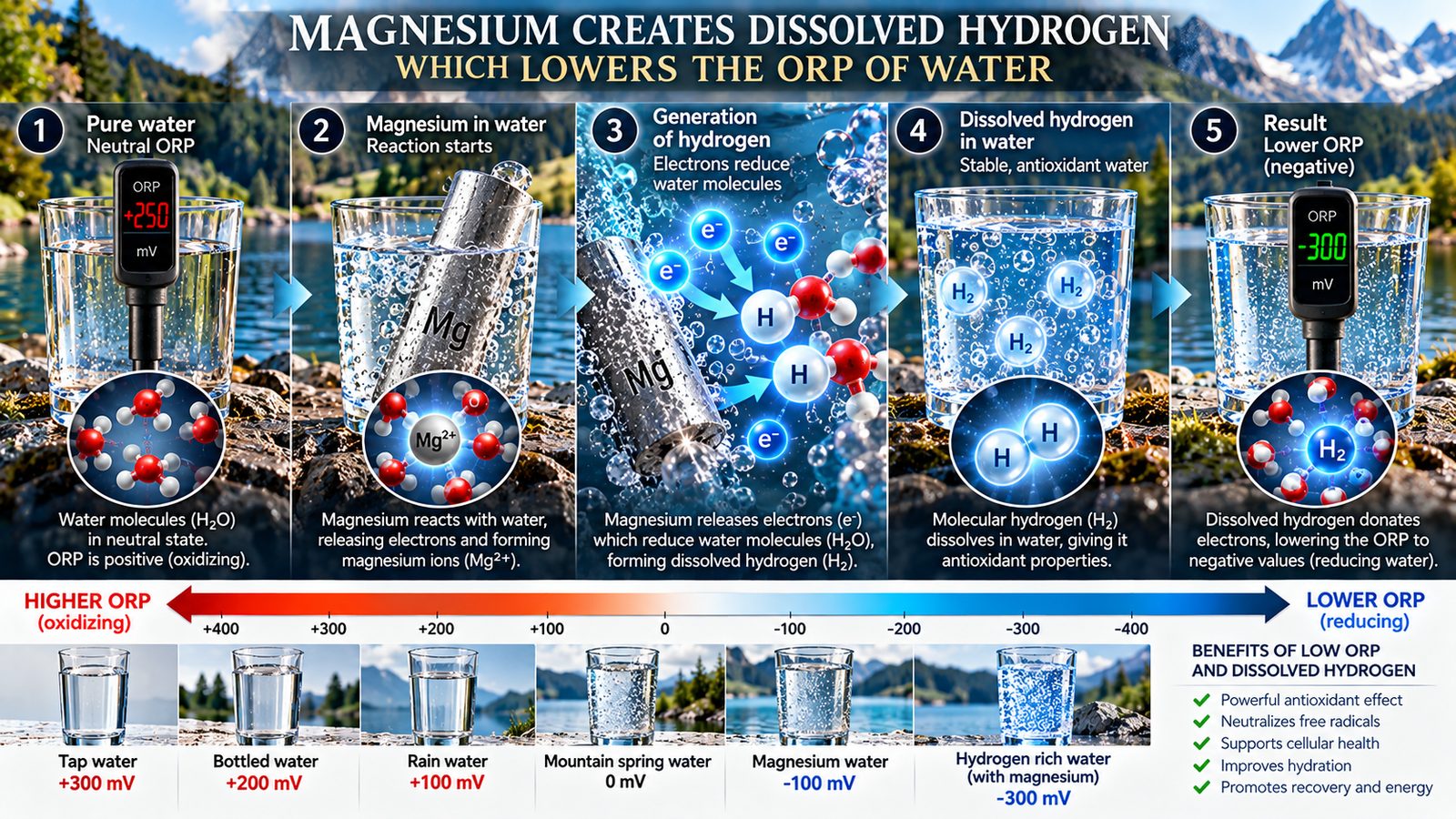
Magnesium gives electrons to water molecules, forming molecular hydrogen H₂ (Mg + 2H₂O → Mg(OH)₂ + H₂). It is dissolved hydrogen that makes ORP negative. The ORP values at the bottom are approximate: every water is different. Hydrogen escapes over time, so this water is drunk fresh.
A magnesium stick makes hydrogen water
Metallic magnesium reacts with water and releases hydrogen, and the water becomes more alkaline. This is exactly how water was prepared in human trials: a magnesium stick gave about 0.55–0.65 mM of hydrogen. Trials in metabolic syndrome and during radiotherapy of liver tumours used this water.
Nakao et al., 2010 ↗ Kang et al., 2011 ↗Mineral alkaline cartridges
Cartridges with calcium and magnesium minerals raise pH and add minerals to water. They give a negative ORP only if they contain metallic magnesium, which releases hydrogen. Check the ORP of fresh water with a meter.
LeBaron, Sharpe, 2022 ↗Natural helpers
Soured milk and fermented dairy
Lactic acid bacteria have reducing activity: they lower the ORP of their environment. Ordinary milk has an ORP of about +440 mV. When French scientists lowered it to −300 mV with hydrogen, bifidobacteria survived better in a fermented milk product.
Reducing activity of lactococci ↗ Ebel et al., J Dairy Sci ↗Fireweed tea
Fireweed's main polyphenol, oenothein B, makes up 14–23% of the plant. It gives strong antioxidant activity. We found no ORP data for fireweed tea in scientific papers; it is worth measuring.
Lasinskas, Jarienė, 2018 ↗Oats
Oats contain special antioxidants, avenanthramides. They relieve inflammation and itching and are used in skin care. The ORP of oat decoction has not been measured scientifically.
Review of avenanthramides ↗Water and your own bifidobacteria
Ionized water with hydrogen increased bifidobacteria in 9 out of 10 people. Natural fermented dairy and hydrogen water work in the same direction: they support beneficial gut flora.
Tanaka et al., 2021 ↗How to check for yourself. Buy an inexpensive ORP meter and a pH test. Measure ordinary water, then the same water with fireweed tea, soured milk or magnesium. Fresh measurements will show what really changes the water.
What happens after a sip
We compare, step by step, acidic and reverse-osmosis water with alkaline ionized water. Where there is no difference, we say so.
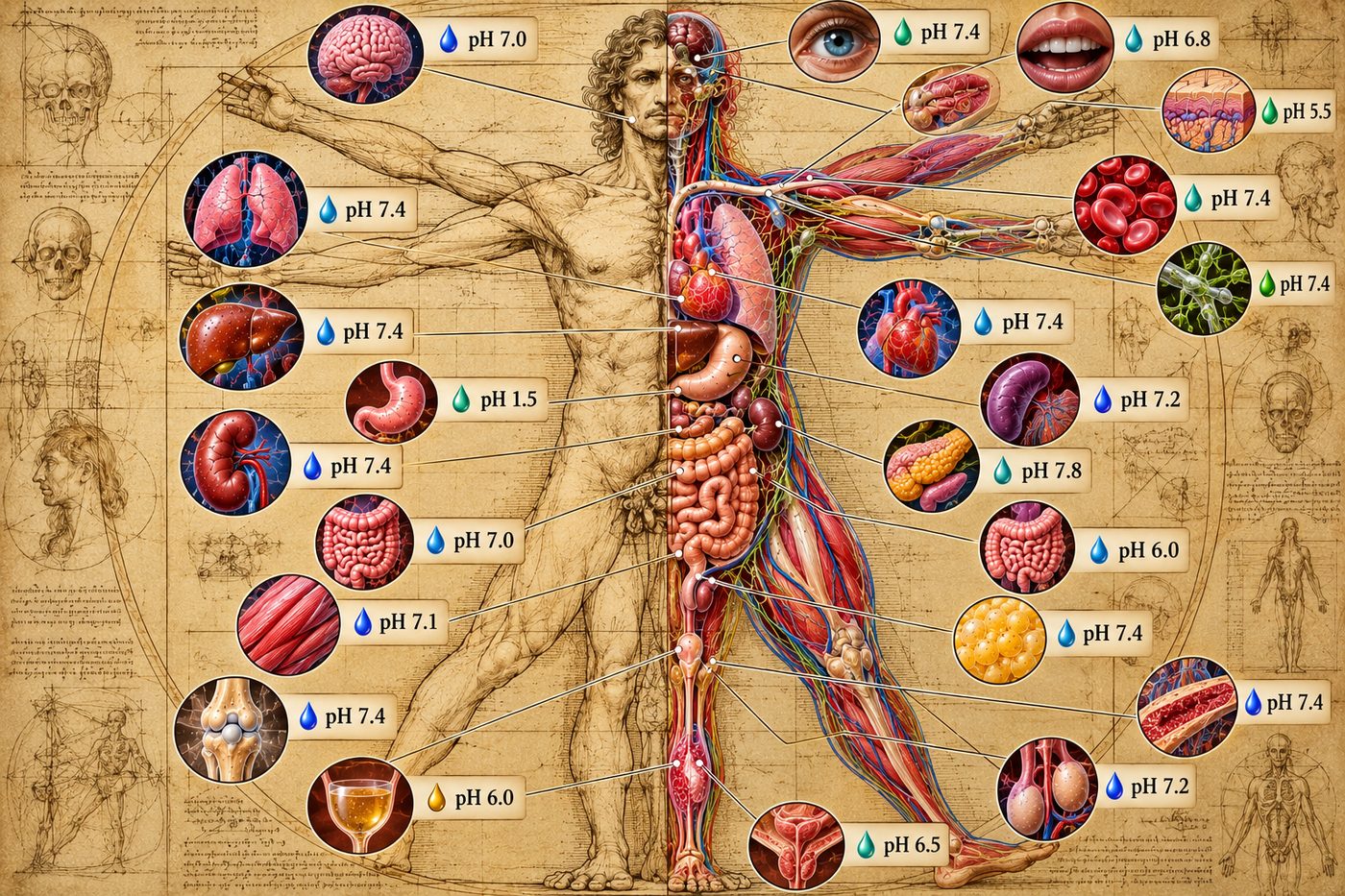
Each organ has its own pH. The values are approximate; the stomach (1.5–3.5) and blood (7.35–7.45) are measured precisely.
The bottom line on "alkalising the body". Alkaline water temporarily changes stomach pH, urine pH and buffer reserves. It does not change blood pH, and that is a good thing: the body keeps it within narrow limits. Sources: Fenton, Huang. BMJ Open, 2016 ↗ Chycki et al. PLoS ONE, 2018 ↗ Koufman, Johnston. Ann Otol, 2012 ↗
Acidification: what is true
Doctors call it acidosis when blood pH falls below 7.35. It is an emergency, not a lifestyle. But scientists also have a milder, well-described concept: dietary acid load. This is where water can help.
Acidosis
Causes: diabetic ketoacidosis, lactic acidosis, kidney disease, poisoning, severe diarrhoea. The cause is treated, in hospital.
McMaster Textbook ↗Acid load
Meat, cheese, fish and grains add acid to the body; vegetables and fruit add alkali. With a high load, urine has more calcium and less citrate, and the risk of stones rises. In some people kidney disease progresses faster.
Osuna-Padilla et al. Nefrología, 2019 ↗Water lowers the load
In a trial in 129 people, 1.5–2 L of bicarbonate mineral water a day for 4 weeks reduced acid excretion by the kidneys by 48–68%. In athletes, alkaline water increased buffer reserves.
Wasserfurth et al., 2019 ↗ Chycki et al., 2018 ↗What is important to understand. Water lowers the acid load through bicarbonate and minerals. Blood pH does not change; the kidneys and lungs hold it. As for the idea that bones give up calcium to neutralise acid, the data on bone density in people on an "acidic" diet are contradictory. Osuna-Padilla, 2019 ↗
Otto Warburg and cancer
The Warburg effect
German biochemist Otto Warburg discovered that cancer cells burn glucose to lactic acid even when oxygen is plentiful. He received the 1931 Nobel Prize for a different discovery: "the nature and mode of action of the respiratory enzyme".
Nobel Committee ↗PET-CT works on the Warburg effect
A tumour greedily takes up labelled glucose (FDG) and lights up on the scan. In this way Warburg's discovery helps find cancer every day.
Sawayama et al. Int J Oncol, 2014 ↗Warburg markers
This is the name for the proteins that carry out "cancer-style" glucose burning: GLUT1, the glucose transporter; HK2, hexokinase; PKM2, pyruvate kinase; LDHA, the enzyme that makes lactic acid; as well as PDK1 and HIF-1α. High levels of these markers are often linked to a worse prognosis in cancers of the oesophagus, stomach, bowel and liver.
Sawayama et al., 2014 ↗Acidic outside, alkaline inside
Around a tumour the environment is acidic: the tumour itself acidifies it with lactic acid. Inside the cancer cell, by contrast, it is alkaline. This "reversed gradient" helps the tumour grow and resist treatment.
Hamaguchi et al. Front Oncol, 2022 ↗Alkalisation in mice
Drinking sodium bicarbonate raised the pH around tumours and reduced metastases in mice.
Robey et al. Cancer Research, 2009 ↗Not proven in humans
Japanese doctors have described alkalisation therapy alongside chemotherapy, but these are small non-randomised observations. A systematic review found not a single study in which alkaline water treated or prevented cancer in humans.
Hamaguchi, 2022 ↗ Fenton, Huang. BMJ Open, 2016 ↗The Warburg effect is proven and is at work in every PET-CT scan. That alkaline water cures cancer is not proven. If you have cancer, discuss any changes with your oncologist.
Food: pH and ORP
A sour taste and acidifying the body are different things. A lemon is sour, with a pH of about 2, but once digested it gives the body alkali. Meat and cheese do not taste sour, yet they add acid.
| Food | pH |
|---|---|
| Lemon juice | 2.0–2.6 |
| Vinegar | 2.4–3.4 |
| Grapefruit | 3.0–3.75 |
| Strawberries | 3.0–3.9 |
| Apples | 3.3–4.0 |
| Oranges | 3.3–4.3 |
| Sauerkraut | 3.3–3.6 |
| Honey | 3.9 |
| Tomatoes | 4.3–4.9 |
| Bananas | 4.5–5.2 |
| Potatoes | 5.4–5.9 |
| Carrots | 5.9–6.4 |
| Butter | 6.1–6.4 |
| Avocado | 6.3–6.6 |
| Broccoli | 6.3–6.9 |
| Corn | 5.9–7.5 |
| Food | PRAL |
|---|---|
| Parmesan | +21.4 |
| Gouda | +20.0 |
| Cod | +19.8 |
| Chicken | +16.5 |
| Pork | +14.7 |
| Salmon | +14.0 |
| Beef | +12.5 |
| White rice | +1.7 |
| Spaghetti | −2.2 |
| Apple | −1.9 |
| Lemon | −2.3 |
| Orange | −3.6 |
| Tomato | −4.1 |
| Carrots | −5.7 |
| Banana | −6.9 |
| Potatoes | −8.5 |
| Spinach | −11.8 |
Plus means acidifying, minus means alkalising. Osuna-Padilla, 2019 ↗
Teeth. Acidic drinks with a pH below 5.5, such as juices, soda and vinegar dressings, can dissolve tooth enamel. Dawes. J Can Dent Assoc, 2003 ↗
Food ORP is hardly ever measured by a single method, so there are no honest ORP tables for food. Ordinary water has a positive ORP because of oxygen and chlorine; water with dissolved hydrogen has a negative one. But, as researchers write, a negative ORP alone does not yet prove a benefit inside the body. LeBaron, Sharpe, 2022 ↗
The best-proven effect
It is for the stomach and gut that the ionizer was recognised as a medical device. This is where most official decisions and double-blind trials are.
Recognised by regulators in Japan and Korea, with double-blind trials. The trials are small, so it is not four drops out of four.
Japan: four recognised effects
Chronic diarrhoea, indigestion, abnormal intestinal fermentation, hyperacidity. Since 2005 the device's purpose has been set by notice No. 112: "improving gastrointestinal symptoms".
3aaa Association, history ↗The first double-blind trial of drinking water
A committee under Japan's Ministry of Health compared ionized water with ordinary water in people with stomach and bowel complaints. Neither patients nor doctors knew who was drinking which water. Conclusion: alkaline ionized water is effective.
3aaa, efficacy ↗Korea: the same four effects
The ionizer is a medical device, not a filter. Water at about pH 9.5, no higher than 10, 0.5–1 L a day.
Kyunghyang Shinmun, 2009 ↗pH 8.8 switches off pepsin
New York: alkaline water irreversibly inactivates human pepsin and neutralises acid well. This matters in reflux, when pepsin reaches the throat.
Koufman, Johnston. Ann Otol Rhinol Laryngol, 2012 ↗Reflux: diet and alkaline water as good as pills
184 patients with reflux in the throat. A Mediterranean diet with alkaline water worked as well as proton pump inhibitors. The study was retrospective, without random allocation.
Zalvan et al. JAMA Otolaryngology, 2017 ↗Irritable bowel syndrome: life got easier
Seoul National University, double-blind trial, 27 people, 8 weeks, water at pH 8.5–10. Quality of life improved markedly more than with placebo: the score fell from 57.2 to 30.8 versus 48.7→42.2. The main endpoint, the share of responders (61.5% vs 42.9%), did not reach significance: the trial was small.
Shin et al. eCAM, 2018 ↗More bifidobacteria
Japan, double-blind: 20 healthy men, 500 ml a day, 2 weeks, pH 9.5 with hydrogen. Bifidobacteria increased in 9 out of 10, and stools shifted towards normal. The trial was funded by Panasonic.
Tanaka et al. Medical Gas Research, 2021 ↗
Blood sugar
There is a signal in several small trials, mostly with hydrogen water. There are no large trials yet. The Japanese association states plainly that an effect in diabetes is not officially recognised.
Promising, but few people and short durations. The water can be drunk alongside treatment, but not instead of it.
Why blood sugar may fall
Less oxidative stress and inflammation
Hydrogen lowers inflammation markers (TNF-α, IL-6, CRP). Inflammation stops insulin from working.
Gut bacteria
In a 2023 trial, hydrogen water changed the make-up of the microbiota, and these changes were linked to metabolism.
Simply more water
When water is short, vasopressin rises, and it raises blood sugar. People with an ionizer usually start drinking more.
What the studies showed
Rats with spontaneous diabetes
OLETF rats drank alkaline reduced water for 26 weeks: from week 12 their blood sugar was lower than in controls, and cholesterol and triglycerides were lower throughout.
Jin et al. Biosci Biotechnol Biochem, 2006 ↗Diabetic mice: lower blood sugar, healthier beta cells
Electrolyzed reduced water lowered blood sugar in mice with chemically induced and genetic diabetes and preserved the mass of pancreatic beta cells.
Kim, Kim. Life Sci, 2006 ↗ Kim et al. Biol Pharm Bull, 2007 ↗Prediabetes: the test normalised in 4 of 6
Double-blind crossover: 36 people with type 2 diabetes or impaired glucose tolerance, 900 ml of hydrogen water a day, 8 weeks. In 4 of 6 people with prediabetes, the glucose tolerance test returned to normal. Modified LDL fell by 15.5%.
Kajiyama et al. Nutrition Research, 2008 ↗Antioxidant defence rose, blood sugar unchanged
20 people with signs of metabolic syndrome, 1.5–2 L of hydrogen water a day, 8 weeks: the antioxidant enzyme SOD +39%, an oxidation marker −43%, HDL +8%. Fasting blood sugar did not change.
Nakao et al. J Clin Biochem Nutr, 2010 ↗Metabolic syndrome: blood sugar 121 → 103
Double-blind, 60 people, 24 weeks of high-concentration hydrogen water. Fasting blood sugar fell from 121.5 to 103.1 mg/dL, glycated haemoglobin by 12%, cholesterol and triglycerides were also lower, and inflammation markers fell.
LeBaron et al. Diabetes Metab Syndr Obes, 2020 ↗Women who drink alkaline water
304 postmenopausal women: those who drank at least a litre of alkaline water a day for two months or longer had lower fasting blood sugar, lower diastolic pressure, a smaller waist and longer sleep. Observational: lifestyle may have played a role.
Chan et al. PLoS ONE, 2022 ↗Prediabetes: blood sugar and the liver
China, double-blind: 73 people with raised fasting blood sugar, a litre of hydrogen water a day, 8 weeks. The difference in blood sugar between groups was significant. Fatty liver resolved in 62.5% in the hydrogen group versus 31.6% on ordinary water. The authors rate the effect as small.
Liang et al., 2023 ↗181 people, electrolyzed hydrogen water
Japan, double-blind, 3 months. On filtered water, glycated haemoglobin and blood sugar rose; on electrolyzed water they fell. Most differences between groups did not reach significance; waist size decreased in physically active people.
Moribe et al. Antioxidants, 2024 ↗
Blood pressure, heart, kidneys
We found no direct trials of "ionized water versus hypertension". There are strong data on dialysis, data on blood viscosity, and observational studies.
The best data come from dialysis patients. Ordinary hypertension needs its own trials.
Taiwan: dialysis with reduced water
Haemodialysis patients were treated with electrolyzed water for a month: oxidative stress fell, the inflammation markers CRP and IL-6 dropped, and antioxidant defence partly recovered.
Huang et al. Kidney International, 2003 ↗Blood becomes less viscous
USA, 100 healthy adults after exercise to dehydration. Blood viscosity fell by 6.30% on alkaline water and by 3.36% on ordinary water.
Weidman et al. JISSN, 2016 ↗Hydrogen dialysis: 41% lower risk of death and cardiac events
Tohoku University: 309 patients, 3.3 years. With dialysis on a hydrogen-enriched solution, the risk of death and cardiovascular events was lower: hazard ratio 0.59. Blood pressure after dialysis improved and fewer blood pressure drugs were needed. Patients were not randomly allocated.
Nakayama et al. Scientific Reports, 2018 ↗Lower cholesterol and triglycerides
24 weeks of hydrogen water in metabolic syndrome: total cholesterol −18.5 mg/dL, triglycerides −47 mg/dL versus placebo, lower inflammation.
LeBaron et al., 2020 ↗Lower diastolic pressure
Women who regularly drink alkaline water have lower diastolic pressure. Observational; it does not prove cause.
Chan et al. PLoS ONE, 2022 ↗Egypt: alkaline diet and water for hypertension
100 patients; in the group on an alkaline diet with water, blood pressure, weight and lipids fell more. No random allocation, and the water is not separated from the diet.
Menoufia University ↗Sport and fatigue
Alkaline and hydrogen water help you recover faster. They do not add endurance or strength.
There is a meta-analysis of 27 trials. The effects on recovery are small but consistent.
Footballers: better hydration
36 footballers drank 4 L of alkaline water a day for a week: hydration markers improved and lactic acid cleared faster.
Chycki et al. Biology of Sport, 2017 ↗Combat athletes: less acidification
Three weeks of alkaline water: acid-base balance after exercise and anaerobic performance improved.
Chycki et al. PLoS ONE, 2018 ↗27 trials, 597 people
Hydrogen lowers lactate during exercise and the feeling of effort, and slightly increases explosive leg power. It does not affect VO₂max, endurance or muscle strength.
Zhou et al. Frontiers in Nutrition, 2024 ↗Post-COVID fatigue
32 patients, 14 days of hydrogen water: fatigue, the six-minute walk test and sleep improved more than on placebo. Breathlessness and anxiety did not change.
Nutrients, 2024 ↗External use: skin, wounds, baths
Alkaline and hydrogen water are for drinking. Acidic water from the ionizer is for washing, and hydrogen baths are used to treat the skin.
Atopic dermatitis in children
Double-blind trial, 22 children. For a week the skin was sprayed twice a day with acidic electrolyzed water. Staphylococcus aureus decreased and the severity of dermatitis fell. With tap water there was no change.
Sasai-Takedatsu et al. Allergy, 1997 ↗Anolyte, a registered antiseptic
In Russia, "Anolyte neutral ANK" is registered as a medicine for skin, mucous membranes and infected wounds.
RLS ↗Hydrogen baths for psoriasis
China, 75 patients, 8 weeks, two baths a week of 10–15 minutes. A 50% improvement in 56% versus 18% of controls, a 75% improvement in 24% versus 3%. Itching decreased. The trial was open-label, without placebo.
Zhu et al. Scientific Reports, 2018 ↗How to use acidic water
The Japanese manufacturers' association: acidic water can be used for washing your face and dishes, but not for drinking. If you have sensitive skin, consult a doctor first.
3aaa ↗Osmosis and acidic water
Reverse osmosis removes almost everything from water: both contaminants and calcium and magnesium. This water is clean, but empty.
Czech hygienist František Kožíšek reviewed the risks of drinking demineralised water long-term for a report prepared by the WHO. The body gets too little calcium and magnesium, and soft water leaches more metals from pipes. That is why water after osmosis is usually remineralised. Kozisek. Health Risks from Drinking Demineralised Water ↗
The slightly acidic reaction of osmosis water comes from dissolved carbon dioxide and is not dangerous in itself. The main drawback of this water is that it contains almost no minerals.
Acidic water from the ionizer (anolyte) is not for drinking. It is used for washing your face and dishes. 3aaa, questions and answers ↗
| Tap water | After osmosis | Alkaline ionized | Acidic ionized | |
|---|---|---|---|---|
| Minerals | Yes | Almost none | Yes | Yes |
| pH | About neutral | Just below 7 | 8.5–9.5 for drinking | Below 7 |
| Hydrogen H₂ | No | No | Yes, while the water is fresh | No |
| Drink | Yes | Yes, ideally remineralised | Yes, start gradually | No, external use only |
Too little water, and the wrong water
What happens if you drink too little, and what happens if instead of water you drink soda, energy drinks or medicinal mineral water every day. And three measures for choosing water: pH, ORP and mineral content.
If you drink too little
Head and muscles
Losing just 1–2% of water impairs attention, alertness and endurance. Thirst switches on late, and in older people it is blunted.
Jéquier, Constant, 2010 ↗Bladder
140 women with frequent cystitis who drank little. Those who added 1.5 L of water a day had 1.7 episodes of cystitis over a year versus 3.2, and 1.9 courses of antibiotics versus 3.6.
Hooton et al. JAMA Intern Med, 2018 ↗Kidneys and stones
All five studies found showed that more fluid means a lower risk of stones. To keep stones from coming back, drinking more than 2 L a day is advised.
Prasetyo et al., 2013 ↗Sugar
Those who drank less than 0.5 L of water a day developed high blood sugar more often.
Roussel et al., 2011 ↗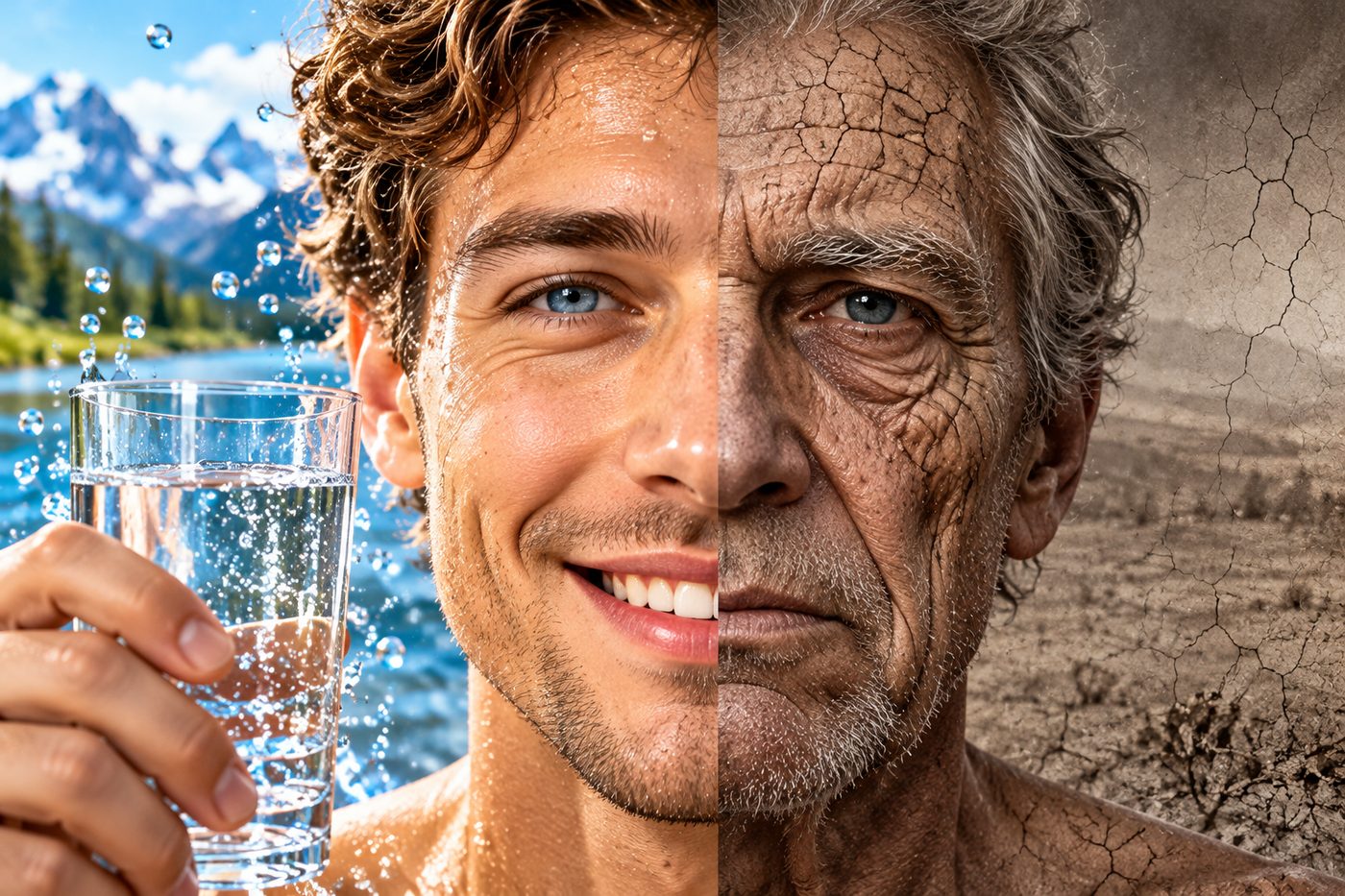
If you drink something other than water
Sugary sodas
11 studies, more than 300,000 people. One or two sugary sodas a day raise the risk of type 2 diabetes by 26% and of metabolic syndrome by 20%.
Malik et al. Diabetes Care, 2010 ↗Tooth enamel
167 popular drinks were measured: pH from 2.65 to 7.85; more than half can potentially erode enamel, including most sodas and energy drinks. Enamel starts to dissolve below pH 5.5.
Rosdy et al. Int J Dent, 2023 ↗ Dawes, 2003 ↗Energy drinks
Arrhythmias, coronary spasms, heart attacks, seizures and anxiety have been described. EFSA's safe caffeine limit: up to 400 mg a day and 200 mg at a time for adults, up to 3 mg per kg of body weight for teenagers. The authors advise no more than one can at a time and two a day.
Costantino et al. Nutrients, 2023 ↗Coffee is not the enemy, but it is not water either
50 men used to coffee: 4 cups a day hydrated the body as well as water. Drink coffee for pleasure within the caffeine limit, and water separately.
Killer et al. PLoS ONE, 2014 ↗Three water measures: pH, ORP, mineral content
| Water | pH | ORP | Mineral content | How to drink it |
|---|---|---|---|---|
| Tap water | about 7 | positive (oxygen, chlorine) | usually low or medium | Yes, if the water is good quality |
| After reverse osmosis | just below 7 | positive | almost no minerals | Yes, but ideally remineralised |
| Table mineral water | varies | positive | up to 1 g/L | Every day |
| Medicinal table water (Borjomi) | varies | positive | 1–10 g/L; Borjomi 5–7.5 g/L | In courses, on a doctor's advice |
| Medicinal mineral water | varies | positive | over 10 g/L | Only on a doctor's prescription |
| Alkaline ionized | 8.5–9.5 for drinking | negative while hydrogen is present | same as the source water | 0.5–1 L a day, fresh |
| Hydrogen water (from a bottle) | about 7 | negative while hydrogen is present | same as the source water | Right after preparation |
| Sugary soda, energy drink | about 2.7 in the most acidic | positive | lots of sugar; caffeine in energy drinks | Not instead of water |
Ordinary water has a positive ORP because of oxygen and chlorine; only dissolved hydrogen makes it negative. LeBaron, Sharpe, 2022 ↗
Minerals: too few is bad, too many is too
Very low
This is how the EU labels water with very low mineral content. Water after osmosis is close to this. Drunk long-term, the body gets too little calcium and magnesium.
EU Directive 2009/54 ↗ Kozisek ↗Good
According to the WHO, water with up to 600 mg/L of minerals tastes pleasant. Above 1,200 mg/L it becomes unpleasant to drink.
NHMRC based on WHO data ↗Borjomi
A medicinal table water: 3.5–5 g/L of bicarbonates, 1–2 g/L of sodium. The WHO advises no more than 2 g of sodium a day, which is as much as in one litre of Borjomi. That is why it is drunk in courses, not instead of water.
Composition ↗ WHO: sodium ↗Table, medicinal table, medicinal. Under the Russian standard, mineral waters are divided by mineral content: table waters up to 1 g/L can be drunk every day; medicinal table waters of 1 to 10 g/L are drunk in courses; medicinal waters above 10 g/L only on a doctor's prescription. In Europe, labels say "low mineral content" (up to 500 mg/L) or "rich in mineral salts" (above 1,500 mg/L). GOST R 54316 (Russian standard) ↗ EU Directive 2009/54 ↗
How to drink it, and who should not
Rules from the recommendations of the Japanese manufacturers' association, the Korean regulator and the Mayo Clinic.
How to start
- For the first two weeks, one glass a day at pH 8–8.5.
- Then pH 9–9.5. The amount tested in Japan is 0.5–1 L a day.
- In Korea, about pH 9.5 and no higher than 10 is recommended.
- Drink it fresh: during storage hydrogen escapes and pH falls.
Medicines and your doctor
- Take medicines with ordinary purified water.
- If you have a chronic illness or are pregnant, consult your doctor.
- If you feel worse or your symptoms do not go away, see a doctor.
- With diabetes and hypertension, water does not replace treatment. Keep monitoring your blood sugar and blood pressure.
Do not use
- With kidney failure or impaired calcium excretion.
- With achlorhydria, when the stomach does not produce acid.
- For children under one year, including for infant formula.
- Acidic water from the ionizer, internally.
pH too high
- Above pH 9.8, excess potassium in the blood is possible, especially with kidney disease.
- Children and older people should start with pH 8–8.5.
Sources: 3aaa ↗ KFDA, 2009 ↗ Mayo Clinic ↗
Myths and reality
There are myths on both sides: among sellers and among those who think ionized water is useless.
There is no research; it is just marketing.
The ionizer has been a medical device in Japan since 1965, and in Korea too. There are double-blind trials on the gut, blood sugar and sport, and data on dialysis. An Indian systematic review in 2022 found noticeable benefit in small trials. Review, 2022 ↗
In Japan, ionized water is an official cure for everything.
In Japan the ionizer is a registered medical device. Its effect on the stomach and gut is officially recognised. The manufacturers' association calls effects in diabetes and atopic dermatitis unrecognised. 3aaa ↗
In the USSR, "living water" was prescribed as a medicine.
The method was officially recognised by the USSR Higher Attestation Commission in 1985. It was "dead water" that became a medicine: anolyte is registered as an antiseptic. Drinking catholyte was used experimentally in Soviet medicine; we found no document registering it as a medicine.
Alkaline water alkalises the blood.
Blood pH stays within 7.35–7.45. What changes is urine pH, stomach pH for a while, and buffer reserves in athletes. BMJ Open, 2016 ↗
A negative ORP is down to alkalinity.
A negative ORP comes from dissolved hydrogen. It escapes, so freshness matters. LeBaron et al., 2022 ↗
The higher the pH, the healthier.
For drinking, 8.5–9.5. The Korean regulator advises against going above 10, and the Mayo Clinic sees a risk of excess potassium above 9.8.
Alkaline water cures cancer.
A systematic review found not a single human study in which alkaline water prevented or treated cancer. BMJ Open, 2016 ↗
Water after osmosis is the healthiest because it is the purest.
It is the purest, but it has no calcium or magnesium. If you drink it all the time, it is better to remineralise it. Kozisek ↗
Tested and not confirmed
Parkinson's disease
A pilot trial showed improvement. A large double-blind trial in 14 Japanese hospitals, 178 patients, 72 weeks, found no difference from placebo. Hydrogen water proved safe.
KAKEN, project results ↗ Yoritaka et al. BMC Neurology, 2016 ↗The main endpoint in IBS
Quality of life improved, but the main endpoint of the Korean trial did not reach significance. Larger trials are needed.
Shin et al., 2018 ↗What is happening now and what comes next
Science is moving from alkalinity to hydrogen, and from small trials to large ones.
Japan: electrolyzed-water dialysis for 1,000 beds
Nihon Trim reported that its electrolyzed-water dialysis system has been installed in Japan for a thousand beds.
Nihon Trim, February 2025 ↗USA: hydrogen water for chronic fatigue
Stony Brook University, 50 people with chronic fatigue syndrome. The trial is testing whether the water reduces fatigue, and whether heart rate variability can predict who it will help. Completion is planned for May 2026.
ClinicalTrials.gov NCT07009691 ↗Electrolyzed alkaline water for constipation
A trial of electrolyzed alkaline reduced water for functional constipation has been registered.
ClinicalTrials.gov NCT05734859 ↗What remains to be proven
The 2022 and 2025 reviews agree: the benefit is seen in short, small trials. What is needed next are long trials with hundreds of people, especially on blood sugar and blood pressure, and data on drinking water above pH 9.5 for many years.
Review, 2022 ↗ Review, 2025 ↗
All human studies
Studies of ionized, alkaline and hydrogen water in humans, all in one place: trials, observational studies, reviews. Both those where benefit was confirmed and those where it was not. Every row links to its source. The registry keeps growing.
Showing: 36
| Year | Country | Water | Topic | Design | People | Result | Source |
|---|---|---|---|---|---|---|---|
| 1997 | Japan | Acidic electrolyzed, external | Skin | Double-blind | 22 | Atopic dermatitis in children: staphylococcus and rash severity fell within a week; no change on placebo | Allergy ↗ |
| 1999 | Japan | Alkaline ionized | GI tract | Double-blind | — | GI complaints: ionized water more effective than ordinary water. The basis of official recognition | 3aaa ↗ |
| 2003 | Taiwan | Reduced, dialysis | Heart and kidneys | Humans | — | Dialysis: oxidative stress and the inflammation markers CRP, IL-6 fell | Kidney Int ↗ |
| 2008 | Japan | Hydrogen | Sugar and metabolism | RCT, crossover | 36 | Type 2 diabetes and prediabetes: glucose test normal in 4 of 6 with prediabetes; modified LDL −15.5% | Nutr Res ↗ |
| 2010 | — | Hydrogen | Sugar and metabolism | Open-label | 20 | Metabolic syndrome: antioxidant enzyme +39%, oxidation marker −43%; blood sugar unchanged | J Clin Biochem Nutr ↗ |
| 2011 | Korea | Hydrogen | Oncology | Placebo-controlled RCT | 49 | Radiotherapy of liver tumours: less loss of appetite and taste disturbance, no rise in oxidative stress; treatment effect the same | Med Gas Res ↗ |
| 2011 | France | Ordinary water, volume | Sugar and metabolism | Observational, 9 years | 3615 | Those who drank 0.5–1 L a day were 32% less likely to develop high blood sugar | Diabetes Care ↗ |
| 2012 | Japan | Hydrogen 4–5 mg/L | Other | Open-label | 20 | Rheumatoid arthritis: disease activity DAS28 3.83 → 2.26; DNA damage marker −14% | Med Gas Res ↗ |
| 2013 | China | Hydrogen | Sugar and metabolism | Open-label | 20 | LDL and apoB fell, HDL function improved | J Lipid Res ↗ |
| 2016 | World | Alkaline water | Oncology | Systematic review | — | No studies in which alkaline water treats or prevents cancer | BMJ Open ↗ |
| 2016 | USA | Alkaline electrolyzed | Heart and kidneys | Double-blind | 100 | Blood viscosity after exercise: −6.3% versus −3.4% on ordinary water | JISSN ↗ |
| 2016–2017 | Japan | Hydrogen | Brain | RCT, 14 hospitals | 178 | Parkinson's disease: no difference from placebo; the water is safe | KAKEN ↗ |
| 2017 | Indonesia | Alkaline electrolyzed | Sugar and metabolism | Quasi-experiment | 28 | Type 2 diabetes: blood sugar fell in the pH 9.5 group | Review 2022 ↗ |
| 2017 | Poland | Alkaline mineral | Sport | Trial | 36 | Footballers: better hydration, lactic acid clears faster | Biol Sport ↗ |
| 2017 | USA | Alkaline + diet | GI tract | Retrospective | 184 | Reflux: as good as proton pump inhibitors | JAMA Otolaryngol ↗ |
| 2018 | Denmark | Alkaline | GI tract | Crossover, open-label | 24 | Microbiota, blood sugar, stools: no change | Review 2022 ↗ |
| 2018 | China | Hydrogen baths | Skin | Open-label, controlled | 75 | Psoriasis: 50% improvement in 56% versus 18% | Sci Rep ↗ |
| 2018 | Korea | Alkaline reduced | GI tract | Double-blind | 27 | IBS with diarrhoea: better quality of life (p = 0.029); main endpoint not reached | eCAM ↗ |
| 2018 | Poland | Alkaline mineral | Sport | Double-blind | 16 | Combat athletes: better acid-base balance and anaerobic performance | PLoS ONE ↗ |
| 2018 | Japan | Alkaline electrolyzed pH 9.2 | GI tract | Double-blind | 60 | Healthy adults: faster reactions, better sleep and stools | Review 2022 ↗ |
| 2018 | Japan | Hydrogen dialysis | Heart and kidneys | Observational, 3.3 years | 309 | Risk of death and cardiovascular events 41% lower (HR 0.59); fewer blood pressure drugs | Sci Rep ↗ |
| 2019 | Germany | Bicarbonate mineral | Other | RCT | 129 | Acid load: renal acid excretion −48…−68% | Food Nutr Res ↗ |
| 2020 | Brazil | Alkaline from an ionizer | GI tract | Observational | 50 | Gastritis: moderate became mild in 43% | Review 2022 ↗ |
| 2020 | India | Hydrogen | Sugar and metabolism | Double-blind | 60 | Metabolic syndrome, 24 weeks: blood sugar 121 → 103 mg/dL, HbA1c −12%, lower inflammation | DMSO ↗ |
| 2020 | Indonesia | Alkaline electrolyzed | Sugar and metabolism | RCT | 81 | Diabetes: lower glycation and oxidation markers; blood sugar unchanged | Review 2022 ↗ |
| 2020 | Japan | Electrolyzed hydrogen | Sport | Crossover | 12 | Triathlon in the heat: no effect | Review 2022 ↗ |
| 2021 | Japan | Alkaline electrolyzed with H₂ | GI tract | Double-blind | 20 | Bifidobacteria increased in 9 of 10 | Med Gas Res ↗ |
| 2022 | Malaysia | Alkaline | Sugar and metabolism | Observational | 304 | Lower blood sugar and diastolic pressure, smaller waist, longer sleep | PLoS ONE ↗ |
| 2022 | World | Alkaline electrolyzed | Other | Systematic review of 9 studies | — | Benefit in small trials; large ones are needed before recommending it to everyone | IJEHE ↗ |
| 2023 | China | Hydrogen | Sugar and metabolism | Double-blind | 73 | Prediabetes: blood sugar fell significantly; fatty liver resolved in 62.5% versus 31.6% | DMSO ↗ |
| 2023 | World | Hydrogen | Other | Review | 81 trials | 81 clinical trials of hydrogen: heart, lungs, brain, infections, oncology | Molecules ↗ |
| 2024 | World | Hydrogen | Sport | Meta-analysis of 27 trials | 597 | Lactate and perceived effort lower; endurance and strength unchanged | Front Nutr ↗ |
| 2024 | Czech Republic | Hydrogen | Other | RCT, single-blind | 32 | Post-COVID: less fatigue, better walking and sleep; breathlessness unchanged | Nutrients ↗ |
| 2024 | Japan | Electrolyzed hydrogen | Sugar and metabolism | Double-blind | 181 | HbA1c and blood sugar fell, but rose on filtered water; most differences not significant | Antioxidants ↗ |
| 2025–2026 | USA | Hydrogen | Other | Recruiting | 50 | Chronic fatigue syndrome: testing fatigue and heart rate variability | NCT07009691 ↗ |
| Ongoing | — | Alkaline electrolyzed | GI tract | Registered | — | Functional constipation | NCT05734859 ↗ |

Andrey Petrovich, water volunteer
Born in 1976. For more than 13 years he has drunk ionized "living" water, used acidic water and studied water closely. He works with gifts of the forest, natural products. He built this site so that everyone can check for themselves what is proven about water and what is not.
"I gathered everything in one place because water has many opponents and many supporters. The opponents are most often those who have never drunk this water. The supporters know what hydrogen water with molecular hydrogen is, and alkaline, acidic and silver water, and they use it for their health and the health of their loved ones."My TikTok channel · @amanita_latvija
All sources
- Association of Alkaline Ionized Water Apparatus (3aaa). History
- 3aaa. Efficacy
- 3aaa. FAQ
- Itokawa Y. An Overview on Researches of Potable Alkaline Water by Electrolysis. J Functional Water, 2003
- Gendlin V. "Living" water lived, lives and will live. Kommersant-Dengi, 1998 (in Russian)
- "Living water" has long been known. Delovoy Peterburg, 2006 (in Russian)
- Anolyte neutral ANK. Russian Register of Medicines (in Russian)
- KFDA recognises the effects of alkaline ionized water. Financial News, 2007
- KFDA: the ionizer is a medical device. Kyunghyang Shinmun, 2009
- Shirahata S et al. Electrolyzed-reduced water scavenges active oxygen species and protects DNA. BBRC, 1997
- Ohsawa I et al. Hydrogen acts as a therapeutic antioxidant. Nature Medicine, 2007
- LeBaron TW, Sharpe R, Ohno K. Electrolyzed–Reduced Water: Review I. Int J Mol Sci, 2022
- Koufman JA, Johnston N. Potential benefits of pH 8.8 alkaline drinking water in reflux. Ann Otol Rhinol Laryngol, 2012
- Zalvan CH et al. Mediterranean diet and alkaline water vs PPI for laryngopharyngeal reflux. JAMA Otolaryngol, 2017
- Shin DW et al. Alkaline-reduced water in IBS with diarrhea. eCAM, 2018
- Tanaka Y et al. Hydrogen-dissolved alkaline electrolyzed water and gut microbiota. Med Gas Res, 2021
- Jin D et al. Anti-diabetic effect of alkaline-reduced water on OLETF rats. Biosci Biotechnol Biochem, 2006
- Kim MJ, Kim HK. Anti-diabetic effects of electrolyzed reduced water in diabetic mice. Life Sci, 2006
- Kim MJ et al. Preservative effect of ERW on pancreatic beta-cell mass in db/db mice. Biol Pharm Bull, 2007
- Kajiyama S et al. Hydrogen-rich water in type 2 diabetes or impaired glucose tolerance. Nutr Res, 2008
- Nakao A et al. Hydrogen rich water in potential metabolic syndrome. J Clin Biochem Nutr, 2010
- Roussel R et al. Low water intake and risk for new-onset hyperglycemia. Diabetes Care, 2011
- LeBaron TW et al. 24-week high-concentration hydrogen-rich water in metabolic syndrome. DMSO, 2020
- Chan YM et al. Alkaline water, metabolic risks, sleep and strength in postmenopausal women. PLoS ONE, 2022
- Liang B et al. Hydrogen-rich water in impaired fasting glucose: RCT, 2023
- Moribe R et al. Electrolyzed hydrogen water for metabolic syndrome. Antioxidants, 2024
- Huang KC et al. Reduced hemodialysis-induced oxidative stress by electrolyzed reduced water. Kidney Int, 2003
- Weidman J et al. Electrolyzed high-pH alkaline water and blood viscosity. JISSN, 2016
- Nakayama M et al. H2-enriched dialysis solution improves prognosis. Scientific Reports, 2018
- Nurses-led alkaline-based diet in hypertension. Menoufia University
- Chycki J et al. Mineral-based alkaline water, hydration and anaerobic exercise. Biol Sport, 2017
- Chycki J et al. Alkaline water and anaerobic performance in combat athletes. PLoS ONE, 2018
- Zhou K et al. Molecular hydrogen and physical performance: meta-analysis. Front Nutr, 2024
- Hydrogen-rich water in Long-COVID: pilot RCT. Nutrients, 2024
- Yoritaka A et al. Hydrogen water for Parkinson's disease: protocol. BMC Neurology, 2016
- KAKEN 15K09360. Results of the hydrogen water trial in Parkinson's disease
- Fenton TR, Huang T. Dietary acid load, alkaline water and cancer: systematic review. BMJ Open, 2016
- Kozisek F. Health Risks from Drinking Demineralised Water
- Jéquier E, Constant F. Water as an essential nutrient. Eur J Clin Nutr, 2010
- Mayo Clinic. Alkaline water: better than plain water?
- Does much hyped alkaline electrolyzed water provide health benefits? Systematic review, 2022
- Effects of alkaline drinking water on hydration, metabolism and physical performance. IJSIT, 2025
- NCT07009691. Hydrogen water in ME/CFS, Stony Brook University
- NCT05734859. Electrolyzed alkaline reduced water in functional constipation
- Nihon Trim. Electrolyzed-water dialysis for 1,000 beds, 2025
- EEA. Ocean acidification indicator
- Cooper LHN. Oxidation-reduction potential in sea water. J Mar Biol Assoc
- Nitrazine test: pH of amniotic fluid and vaginal secretions
- Evans DF et al. Measurement of gastrointestinal pH profiles in normal ambulant human subjects. Gut, 1988
- Lambers H et al. Natural skin surface pH is on average below 5. Int J Cosmet Sci, 2006
- O'Hanlon DE et al. Vaginal pH and microbicidal lactic acid when lactobacilli dominate the microbiota. PLoS ONE, 2013
- Fukuda S et al. Bifidobacteria can protect from enteropathogenic infection through production of acetate. Nature, 2011
- Welsh C et al. Hydrogen in the gut. Nature Microbiology, 2025 (Monash University)
- Nobel Prize in Chemistry 2003: water channels (aquaporins)
- NHS South West London. Keeping hydrated: 30 ml/kg
- Hatae T, Miwa N. Electrolytic hydrogen-generating bottle: chlorine and ozone within safety standard. Med Gas Res, 2021
- Johnsen HM et al. Molecular Hydrogen Therapy — A Review on Clinical Studies and Outcomes. Molecules, 2023
- LeBaron TW, Sharpe R. ORP should not be used to estimate concentrations of aqueous H2. Front Food Sci Technol, 2022
- Kang KM et al. Hydrogen-rich water and quality of life in radiotherapy for liver tumors. Med Gas Res, 2011
- Ishibashi T et al. Hydrogen water in rheumatoid arthritis. Med Gas Res, 2012
- Song G et al. Hydrogen-rich water decreases serum LDL-cholesterol. J Lipid Res, 2013
- McMaster Textbook of Internal Medicine. Metabolic acidosis
- Osuna-Padilla I et al. Dietary acid load: mechanisms and evidence. Nefrología, 2019
- Wasserfurth P et al. Effects of mineral waters on acid–base status: randomized trial. Food Nutr Res, 2019
- Nobel Prize in Physiology or Medicine 1931: Otto Warburg
- Sawayama H et al. Clinical impact of the Warburg effect in gastrointestinal cancer. Int J Oncol, 2014
- Hamaguchi R et al. Clinical review of alkalization therapy in cancer treatment. Front Oncol, 2022
- Robey IF et al. Bicarbonate increases tumor pH and inhibits spontaneous metastases. Cancer Res, 2009
- Clemson University. pH values of common foods (FDA data)
- Dawes C. What is the critical pH and why does a tooth dissolve in acid? J Can Dent Assoc, 2003
- Sasai-Takedatsu M et al. Acid electrolytic water in atopic dermatitis. Allergy, 1997
- Zhu Q et al. Hydrogen-water bathing in psoriasis. Scientific Reports, 2018
- Allied Market Research. Water ionizer market
- Bakhir VM et al. Electrochemical modular cell for processing electrolyte solutions. US Patent 8.961.750 B2, 2015
- Ebel B et al. Use of gases to improve survival of Bifidobacterium bifidum by modifying redox potential in fermented milk. J Dairy Sci
- Contribution of exofacial thiol groups in the reducing activity of Lactococcus lactis
- Lasinskas M, Jarienė E. Opportunities for the use of fireweed (Chamerion angustifolium). Agricultural Sciences, 2018
- Biological activities and health benefits of avenanthramides (review)
- Hooton TM et al. Effect of increased daily water intake on recurrent cystitis. JAMA Intern Med, 2018 (summary)
- Prasetyo T et al. Increased fluid intake in the prevention of urinary stone formation: systematic review. Acta Med Indones, 2013
- Malik VS et al. Sugar-sweetened beverages and risk of metabolic syndrome and type 2 diabetes. Diabetes Care, 2010
- Rosdy NMMN et al. Erosive potential and sugar content of popular beverages. Int J Dent, 2023
- Costantino A et al. The dark side of energy drinks. Nutrients, 2023
- Killer SC et al. No evidence of dehydration with moderate daily coffee intake. PLoS ONE, 2014
- Directive 2009/54/EC, Annex III: mineral content labelling
- Australian Drinking Water Guidelines: total dissolved solids (WHO palatability)
- Borjomi mineral water: composition
- WHO EMRO. Reducing salt/sodium consumption: less than 2 g sodium (5 g salt) a day
- GOST R 54316. Natural mineral drinking waters (Russian standard)